

Action Mesothelioma Day 2026 Event Report
One of the key elements of being a Union Safety official, is to be able to attended events and write reports on major issues.
Here, retired Branch Health & Safety Co-ordinator and now a member of the Trustees of Liverpool's Merseyside Asbestos Victims Support Group; Derek Maylor, provides a brief report of this year's Action Mesothelioma Day:
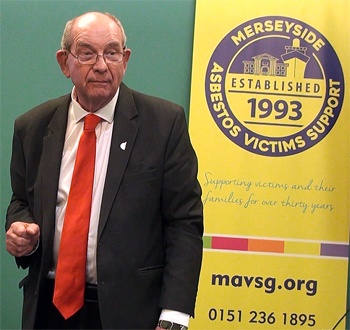
A local Primary School Choir, introduced by John Flanagan from MAVSG, opened the event.
Pictured are the choir members, attendees, and local dignitaries following the Release of Doves
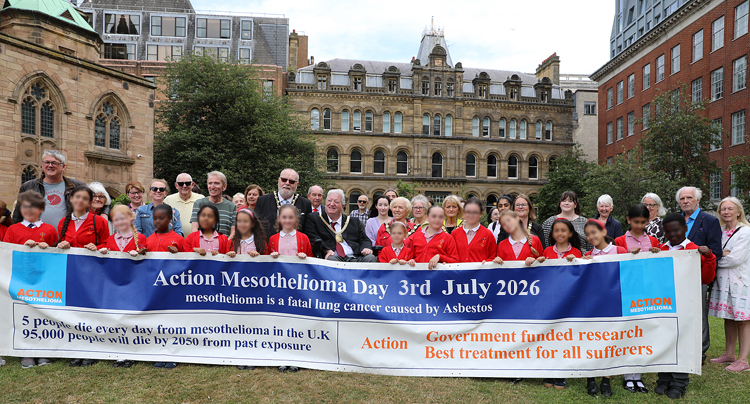
Faces blurred for safety reasons
Dignitaries from authorities across Merseyside and the Wirral introduced themselves by sharing personal reflections on asbestos and its impact on their families and communities. They all stressed the need for the right treatment, effective support, and further research into mesothelioma care. They also joined the chidren of the choir to release Dove's from the gardens of St Nicholas Church, Liverpool's oldest church situated on Chape Street opposite the event venue of the Atlantic Hotel.
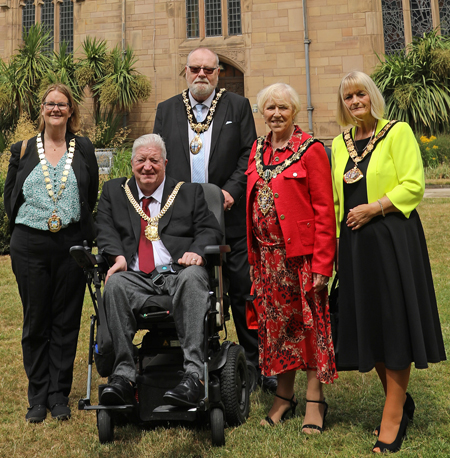
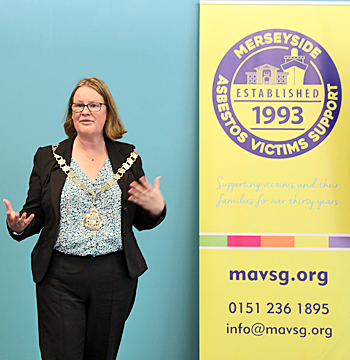
Picured above are the Mayors attending from the local authorities: L-R: Mayor of West Lancs, Councillor Janet Ingham - Mayor of Liverpool, Councillor William Shortall - Mayor of St Helens, Councillor Stephen Little - Mayor of Wirral, Councillor Mary Jordan - Mayor of Halton, Councillor Pamela Wallace
Lord Mayors Address
The Lord Mayors attending were asked by John Flanagan from Merseyside Asbestos Victims Support Group whose annual event this is, to say a few words. The Mayor of Liverpool spoke first:
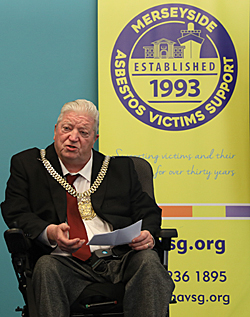 "Well thanks everybody and I'm just going to keep it short and sweet here. I've got a few prepared words here. And I'm going to stick to the word asbestos because it's something everybody can relate to and what the condition is because sometimes people get confused over what the other words mean. And in Britain approximately 2,500 people die from asbestos related conditions every year because of the exposure of asbestos and it still goes on today. Unfortunately, there were 2,146 cases of deaths related to asbestos, a great big in 2024. You wouldn't actually believe that anymore, would you? It's really hard to believe that at all.
It's shocking when you read it. And while we welcome the decline, it's still a horrific tragedy for every family, which it is of course. And while the deadly material has been banned in the UK since 1999, it still lurks in at least half a million buildings constructed before that year, posting huge risks to anyone who comes in contact with it. I've sat from one of my sins in the planning, and we did a site visit.
And one of the reasons why we did this site visit was there was potentially asbestos within the grounds of the soil. So it's in more than you think, you know, just in the buildings. And that was for another school, for the land to be remediated for expansion of the school. So it lurks in more places than you could be credit for. Today, you know, today we've come together with support groups, charities and other organisations, individuals, to call for the awareness of the dangers of asbestos. And the main focus today is to raise awareness and urgent need for research into finding a cure, the importance on the international ban on the import and export and general use of asbestos, and to raise awareness that it's still a danger to those working or studying and building with asbestos today.
And the other thing is you can go elsewhere, because it's a long legacy condition. You might get it in 1970 and it might pop up a long time, 20 or 30 years later. So it's something you can be really careful of and we're more aware of it now than ever before. But it still needs to be brought to the attention of people. So I'm going to wish everyone a happy day today and hurry on the event and I'm looking forward to speaking to lots of people. but it is about raising awareness today. So I thank you all for your attention. Thank you."
 Next to speak was Mayor of West Lancashire, Janet Ingham:
"Absolutely, this is about awareness of our best selves.
What I was going to say as well, health is one of those things that in politics it's even more than money. And you realise this with health conditions. And it's so important, we hear victim support, it's so important that people with these conditions can speak to people.
I am somebody, you can't see it, but it's nothing to do with asbestos. I'm epileptic and over my life I've suffered various times and it is so important to be able to go to these groups, speak to people. This work is really, really important."
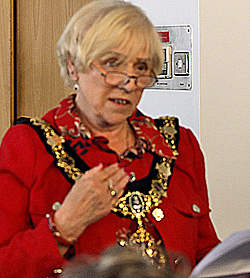 Following, with another short address, the Mayor Of Wirral, Councillor Mary Jordon. Speaking on a subject she said was close to her heart:
"It's the urgent need for increased investment in research and that will lead to better treatments that will one day lead to a cure for mesothelioma and it's remarkable to think that throughout many countries we still have weed banders, asbestos but others haven't.
Research is, like I said, is very important to me. It gives us hope. Scientists, clinicians and researchers continue to make encouraging progress in understanding mesothelioma and developing new treatments. Every clinical trial, every breakthrough and every investment in research brings renewed hope. But research needs sustained funding. It needs public awareness and it needs all of us to continue to support organisations that refuse to accept the status quo. Thank you."
The final Mayor to say a few words was Stephen Little, Mayor Of St Helens:
"Yeah, I'll just say, I'll be brief. Steve Little from St Helens. I first came into contact with Asbestos many, many years ago. I was about 1982, I was a firefighter. And even then, you know, the dangers were unknown.
So all I want to simply say to everybody is, the people of St Helens are with you as you keep pushing forward for the right treatments and for the right justice that's required. For all the victims and their families.
So the people of St Helens are definitely with you in that struggle and we applaud you for what you're doing."
Doved Release In Memory Of Those Lost to Asbestos Diseases
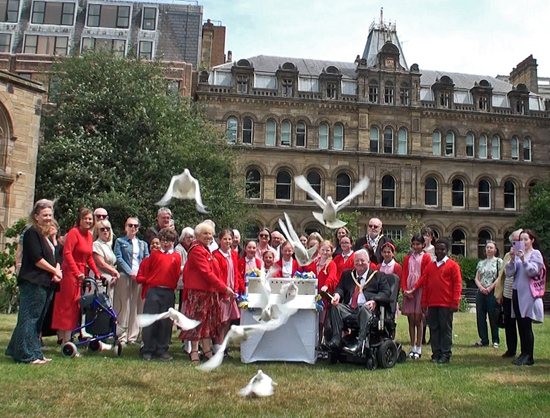
Faces blurred for safety reasons
Presentations
Mr William Kent, Consultant in Respiratory Medicine at Liverpool University Hospitals Foundation Trust, explained mesothelioma and the role of the respiratory team in supporting patients from diagnosis through symptom management and treatment. In doing so, he described his role of helping patients breathe more comfortably and navigate NHS care, usually alongside pleural and oncology teams:
"Thank you very much for asking me to talk to you today. It really is a privilege to be here today. Firstly, I'd like to say if you've suffered from ECDM or you've cared for someone who does, you'll know far more about the realities of living with the condition than I do. Hopefully, I may be able to share some insights that I've had over the years.
So I'll briefly mention my assignment to the owners who are on the same page. The role of the respiratory team as I said, some common symptoms, the diagnostic journey, and managing common symptoms such as breathlessness, cough and pain."
Mr Kent gave a detailed presentation using slides:
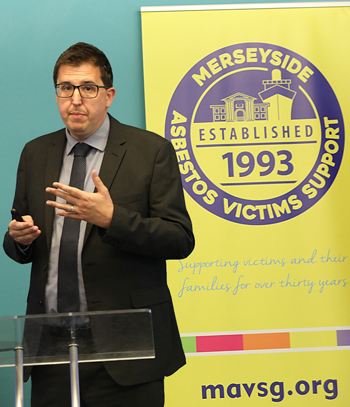 Mesothelioma affects the lung lining rather than the lung tissue itself, and fluid often builds up between the two membranes surrounding the lung. Around 80–90% of cases stem from asbestos exposure, with the disease sometimes taking decades to develop because of the slow, cumulative cell damage the fibres cause. Diagnosis typically progresses from chest X-ray to CT scan, possibly a pleural clinic visit, keyhole surgery or sedated camera examination, followed by a multidisciplinary team discussion to plan treatment.
On Symptoms and management, he advised that common symptoms include breathlessness, persistent cough, weight loss, fatigue and pain. Breathlessness is often linked to pleural effusion; cough can usually be eased with simple measures (sipping water, steam inhalation) or, when needed, low-dose morphine, which is safe and effective when properly prescribed. Pain can likewise be controlled through a range of medications and techniques.
He stressed reporting symptoms early, since they can often be improved, and pointed listeners to resources including the Mesothelioma Care Record booklet, the Your Health Companion app, and the "My Pleural Effusion Journey" website.
He continued by speaking on Living well, encouraging pacing activity, eating small frequent meals, accepting support, and focusing energy on what can be controlled. Drawing on training in serious-illness conversations, he highlighted reflective questions like "where do you get your strength from?" and encouraged patients to consider what brings them joy and to discuss their priorities and hopes with loved ones.
He dispelled the misconception that palliative care means giving up on treatment or is only for end-of-life care, noting it can improve quality of life alongside ongoing therapies. He urged carers to look after themselves too — taking breaks, seeking support from groups and specialist nurses, registering as a carer with their GP, and claiming benefits like Carer's Allowance, pointing to supportingcarersofthosewithbreathlessness.org (as referenced) for guidance.
His Closing message was that treatment options and symptom control have improved significantly over the past decade, particularly with immunotherapy and better-established pleural services. While not everything can be fixed, much can still be done, and quality of life can be meaningfully improved.
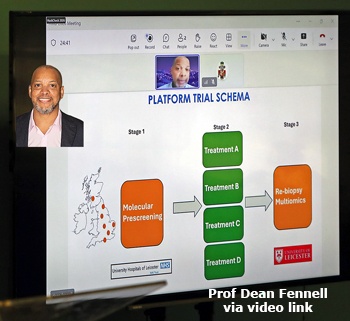 Professor Dean Fennell, Professor and Consultant in Thoracic Medical Oncology and Director of the Mesothelioma Research Programme, gave an update on the SELECT mesothelioma trial, personalised treatment, and precision medicine.
He explained that the Umbrella Trials test multiple drugs in small sample groups of 26 patients across ten centres nationwide. He also highlighted how AI can process large volumes of information quickly, enabling teams to share, compare, and learn from data more effectively.
The aim is to bring the most effective drugs into the NHS sooner and identify the best treatment combinations for each individual patient.
SELECTmeso1 is a new trial, investigating whether a targeted cancer treatment can improve outcomes for patients who have a particular genetic biomarker (1).
- Professor Dean Fennell. (2026). Finding the right target: Personalising treatment for an aggressive asbestos-linked cancer. [Online]. University of Leicester. Last Updated: 17 June. Available at: https://le.ac.uk/news/2026/june/mesothelioma-clinical-trial-leicester. [Accessed 5 July 2026].
Nurses Elanor McDonough and Zara Harrison, Macmillan Pleural and Clinical Specialist Nurses at Wirral Univeristy Teaching Hospita NHS Turst, described the wraparound care provided to patients throughout their treatment pathway. They explained that breathlessness can be very distressing for patients and their families, but support is available to help maintain independence and ease its impact.
This is the precise of their talk, and the video of their presentation is below.
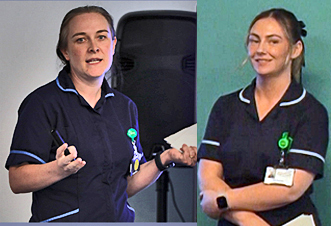 Ellie and Zara, described how their service developed and now operates, by first detailing the background:
"A pleural clinic was set up in 2015 to manage pleural disease and reduce emergency admissions, but demand soon outstripped capacity. In 2019, Macmillan funding created a dedicated team — two CNSs (Ellie and Zara), a Cancer Care Coordinator, a respiratory consultant, and a specialist consultant lead — to provide specialist care for mesothelioma patients and those with malignant pleural effusions."
Next Ellie explained the details of the clinic's Care pathway:
"Patients are usually referred urgently by their GP, seen face-to-face, and given access to a direct helpline (no switchboard, Monday–Friday). They undergo diagnostic investigations, sometimes including biopsies at Liverpool Heart and Chest Hospital, with support throughout from referral to results, oncology, and — where needed — end-of-life care. A key intervention is the Indwelling Pleural Catheter (IPC), which lets patients manage breathlessness at home, avoid repeated hospital visits, and maintain independence (district nurses or trained family members can drain it, and patients can even travel).
If anyone has experienced breathlessness, this is so debilitating and it is very, very distressing for patients and their loved ones. And if it's left unmanaged, it will result in admissions to hospital. So what we want to do is try and prevent unnecessary admissions to A&E and wards if it can be done safely. One of the ways we manage these pleural effusions is through IPC insertion. So that's an indwelling pleural catheter.
It allows our patients to continue treatment that get their fitness better, control their breathlessness, allow them to remain at home, they don't have to come in for constant appointments, district nurses can drain them, we can train family members to drain, people can go on holiday with them, and it mainly helps people gain more independence and control over their disease."
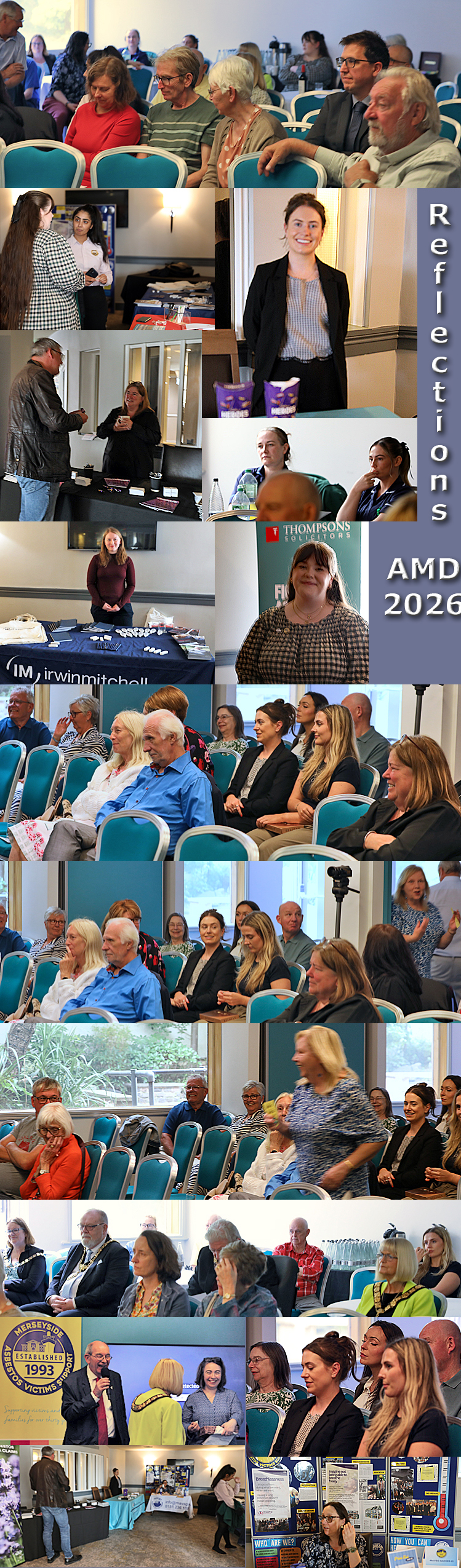
Reflections Of The Day
Source: Derek Maylor: report / Chris Ingram: photography & video, additional text / MAVSG
